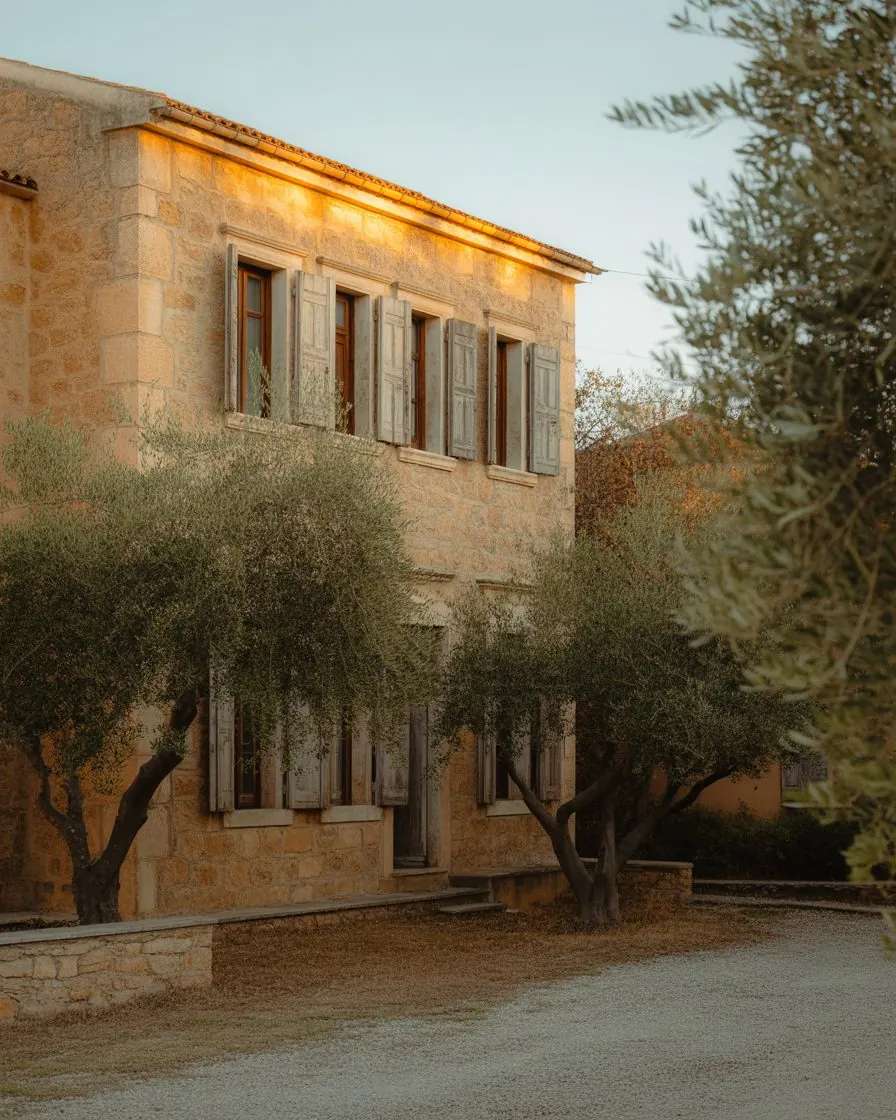
Members-only home watch across the Peloponnese for diaspora and foreign owners. Whether it's a sea-view villa near Kalamata, a tower house in the Mani, a village house in the Arcadian highlands, or a holiday flat on the Messinian coast — we're the trusted local presence between your visits.
The Peloponnese is the Greece of grandparents, of inherited stone houses, of family villages that sit empty most of the year while their owners build lives in Melbourne, Toronto, Berlin or Cape Town. It's also the Greece of newer foreign buyers — UK, German and Dutch retirees who bought a sea-view house on the Messinian Gulf or an olive-grove cottage in the Mani and now wonder, from a distance, how they're going to look after it.
Home watch in the Peloponnese is a different discipline than home watch in central Athens. The properties are older, the access is harder, the seasonal weather is harsher, and the local administrative landscape differs from municipality to municipality. We treat it as its own service, with its own routing and its own local network.
Three things make property care in the Peloponnese genuinely different from elsewhere in Greece:
The Peloponnese is a confirmed service area. The places below describe the main property contexts we assess; acceptance still depends on access and a sustainable written attendance plan for the individual property.
Kalamata, Pylos and the wider Messinian coast are confirmed service areas. Property-specific access and attendance are reviewed before onboarding. We have a deeper page on Kalamata.
Stone tower-house country. A distinctive architectural tradition, harder access (winding mountain roads, very small villages, limited mobile coverage in places), and a growing market in restored Maniot towers held by foreign and diaspora buyers. We have a deeper page on the Mani.
Closer to Athens, with more apartment stock in central Nafplio and more seafront holiday homes in Porto Heli and the Argolic Gulf. Attendance is confirmed for the specific property rather than implied by a generic route.
The deeper south of the Peloponnese. Quieter, with older properties, lower foreign-buyer density but a meaningful diaspora-owned village stock. Monemvasia and Vatika have a small but distinct second-home market.
Northern Peloponnese (Patras, Aigio) is more urban; central Arcadia (Vytina, Dimitsana, Stemnitsa) is the mountain village heart of the Peloponnese — stone houses in pine forest, snow in winter, the kind of inherited property that's been in the family since the 19th century.
The same structured inspection runs in every Peloponnese property, regardless of village or villa:
Plans on the Plans & Pricing page show how one, two or four visits per calendar month map to price. Any custom attendance pattern for a remote property must be agreed separately in writing.
You're far from alone. Tens of thousands of diaspora-owned village houses across the Peloponnese sit in this exact state. The first step isn't a renovation quote — it's an honest baseline survey. We document what's there, what needs urgent attention, and what the realistic options are (restore for family use, restore for rental, restore for sale, or maintain as-is). Read our 7-day playbook for diaspora heirs for context before you book.
One discovery call, ~30 minutes. We talk through your property, your travel pattern, and what's worrying you. No pitch, no pressure. If we're not the right fit, we'll tell you and point you somewhere better.
If we proceed: an onboarding visit at the property (60–120 minutes depending on size and access — survey, key intake, baseline condition documentation), and your regular visit schedule starts the following cycle.
We cover the whole Peloponnese peninsula, with regular routing through Kalamata, the Mani, Pylos and the Messinian coast, Nafplio and the Argolis, Sparta and Laconia, Patras and Achaia, and the central Arcadian villages. Inspection frequency for outlying properties is set during onboarding to balance visit cost with travel time.
Mountain-village enquiries are assessed individually. Road access, seasonal conditions, travel time and a sustainable visit schedule must be confirmed before onboarding.
The four most common: humidity in stone-built houses with poor ventilation, particularly between October and March; pest activity in olive-grove properties (mice, snakes, occasional scorpions); damage from torrential winter rains in mountain villages, especially blocked gutters and roof leaks; and the unique problems of stone houses left unattended for years — settling cracks, vegetation breaching walls, and slow water ingress that destroys interiors quietly.
Standard plans start at €99 per month, excluding VAT where applicable. Any property-specific travel, routing or attendance condition is assessed before onboarding and disclosed in the written quote and service agreement. The one-time onboarding fee is €100 excluding VAT where applicable.
Start with a single onboarding visit. We document baseline condition honestly: what needs immediate attention (roof, water, electrical), what can wait, and what the realistic path is — restore for use, restore for sale, or maintain as-is. Many diaspora-owned village houses in the Peloponnese sit in this exact bucket. We've written a longer guide for the first-week version of this situation in our Inherited Property First-Week Playbook.
Yes. Bills, building dues where applicable, ENFIA coordination with your Greek accountant, ΑΦΜ updates, and the local water utility (most Peloponnese municipalities use ΔΕΥΑ networks rather than ΕΥΔΑΠ) are all standard parts of our administrative add-ons. We translate everything and explain it plainly before any payment leaves your hands.
Repairs are separate from home checks. When contractor work is requested, Estia confirms the available provider, credentials where relevant, written scope, quotation and owner authorization before work begins.
Schedule a 30-minute discovery call. We'll walk through your specific situation — village house, sea-view villa, family compound, restoration project — and tell you honestly whether home watch makes sense for you.
Schedule a discovery call