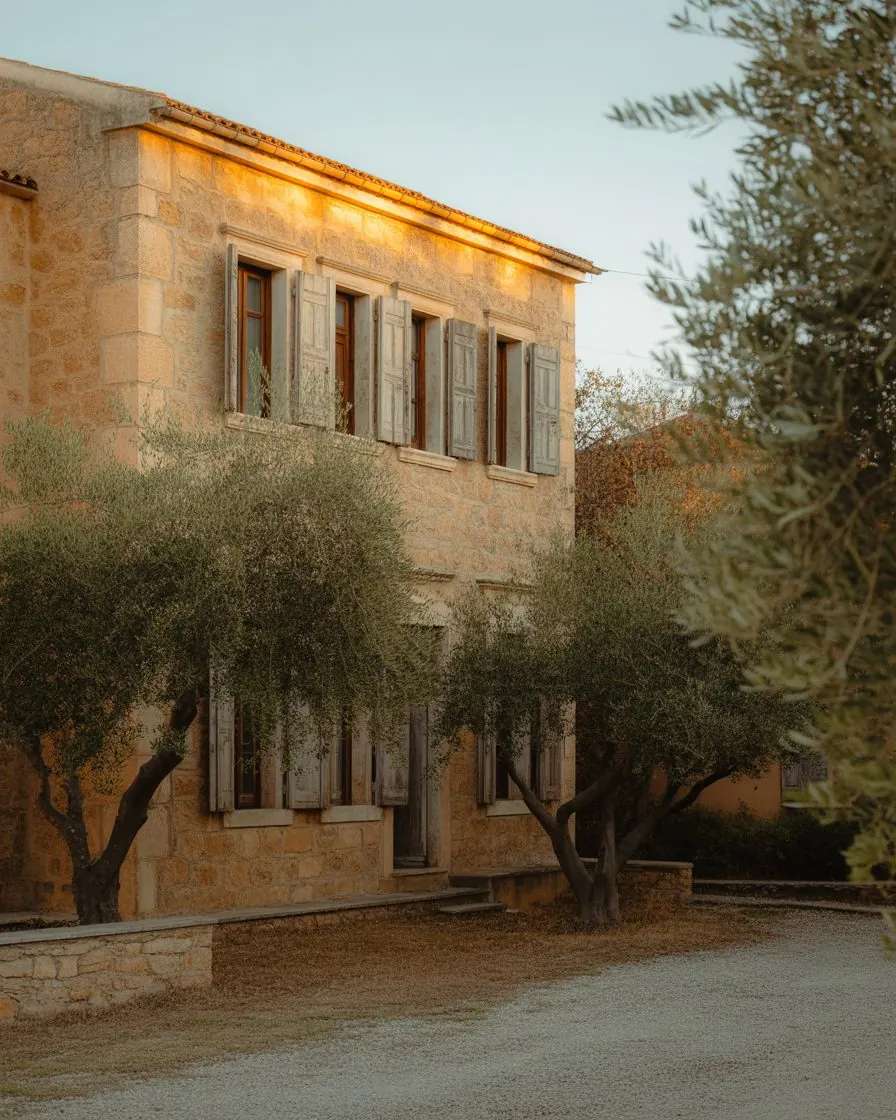
Property care across Greece for the Greek-South-African community. Tower houses in the Mani, Kalymnos heritage homes, Cycladic village stock, Cretan family properties. We're the trusted local presence between visits — for owners who visit every 18 months, or who are quietly thinking about coming home.
The Greek-South-African community is one of the more distinctive Greek diaspora populations outside Europe. Smaller than the Greek-American or Greek-Australian communities — but with very deep roots, very specific origin patterns, and a strong continued connection to the family home in Greece. The first generations arrived in South Africa from the 1890s onwards, particularly from Kalymnos (the sponge-diving connection that anchored the Durban Greek community), from the Mani (particularly Inner Mani, which sent waves of emigrants), from the Cyclades and Crete.
Today, four or five generations later, most Greek-South-African families still hold ancestral property in Greece. Some are well-maintained second homes; many have sat empty for decades, looked after distantly by elderly relatives or trusted neighbours. The questions are familiar to any diaspora community — how to maintain, when to visit, whether to renovate, whether to sell — but they have a distinctively South African shape too.
Areopolis, Gerolimenas, Vathia, Kotronas, Limeni, Kardamyli, Stoupa, Itylo. The Mani sent very high proportions of its 19th-century population to South Africa. Tower houses, stone village houses, and coastal villas. See our Mani landing page for the specifics.
Kalymnos, Symi, Patmos, Leros, Kos and Rhodes enquiries are assessed individually. We do not imply a standing island route or local hub; attendance must be confirmed for the exact property.
Mykonos, Andros, Tinos, Syros, Paros, Naxos and Sifnos enquiries are assessed individually, including ferry access, seasonal constraints and the requested visit count.
Crete has a substantial Greek-South-African community connection, particularly to the Chania region. Crete enquiries are assessed property by property; Estia does not claim a permanent branch or standing local route.
Estia accepts enquiries across Greece, with confirmed service areas including Athens and Attica, Thessaloniki, Halkidiki, the Peloponnese and Central Greece. Each property's access and attendance plan are confirmed before onboarding.
Most Greek-South-African owners we talk to are in one of three modes — and the property-care plan looks different in each:
The family visits every 1-2 years. The property needs to remain insurable, structurally sound, and walk-in ready for the visit. This is the most common mode. Monthly inspections, light pre-arrival prep, full bill admin. Cost is the primary constraint.
The family is actively planning to return to Greece (full-time, part-time, or seasonal) within the next 2-5 years. Property care shifts to include a remediation plan, energy-efficiency considerations, potential renovation pathway, and bringing utilities/admin/legal up to current standard. This is a more intensive phase but typically time-bounded.
The family has decided the property doesn't fit the next generation's life. Property care shifts to maximising sale value and reducing legal/admin friction at sale time — clean ENFIA history, updated cadastre (Ktimatologio) records, building-meeting and building-dues current, baseline condition documented. Our selling Greek property as a non-resident piece covers the broader frame.
Schedule a 30-minute discovery call. We talk through your property, your visit pattern (or lack of), your honest mode (preserve, prepare to return, prepare to sell), and your priorities. No pitch, no pressure.
South Africa has one of the most established Greek diaspora communities outside Europe — approximately 60,000 to 80,000 people of Greek origin (some estimates higher), concentrated in Johannesburg (Sandton, Bedfordview, the eastern suburbs), Cape Town, Durban, and Pretoria. The community is largely descended from Greek migrants who arrived between the 1890s and the 1970s — initially small traders and shipping connections, later industrialists and professionals. Many families originate from Kalymnos, the Cyclades, the Dodecanese, Mani and Crete, and most families still hold ancestral property in these regions.
Three things stand out. Distance and visit infrequency — Greek-South-Africans typically visit every 1-3 years rather than annually, which means longer gaps for problems to develop. Currency exposure — the rand has fluctuated significantly against the euro, making property carrying costs feel different at different times. And political/economic context — many Greek-South-African families have been preparing property for potential return migration or as a hedge, which changes the priorities for property care from 'preserve for visits' to 'ready when needed'.
We invoice in euros and accept payment by international SWIFT transfer or by card (which handles FX automatically). South African Reserve Bank exchange-control rules limit individual outward transfers; most clients use the annual single discretionary allowance (currently R1 million per adult per year) or single discretionary plus foreign investment allowance for property-related payments. For larger sums (significant repairs, renovation), your South African forex bank can typically clear the payment with property documentation.
Yes. The Mani is within Estia's confirmed Peloponnese service area. Access, visit count and any specialist-contractor requirement are assessed for the individual property and confirmed in writing. See the dedicated Mani landing page for the property-care context.
Kalymnos, Dodecanese and Cyclades enquiries are assessed property by property. Ferry or flight access, visit count, travel conditions and operational availability must be confirmed in writing before a property is accepted.
Yes — and this is a growing conversation with Greek-South-African families. Preparing a property for potential return migration (rather than just preserving it for visits) means: a baseline condition survey and remediation plan, energy-efficiency upgrades planning (subsidised under Greek Exoikonomo), bringing utilities and admin up to date, and often a renovation pathway. We coordinate the survey-and-plan stage and oversee the work. Our returning-diaspora year-one blog is a useful starting point.
Pricing is the same regardless of country of residence. Standard plans are €99, €149 or €249 per month, excluding VAT where applicable. Any property-specific travel or attendance condition is shown in the written quote.
Schedule a 30-minute discovery call from Johannesburg, Cape Town, Durban, or wherever you are. No pitch, no pressure.
Schedule a discovery call